

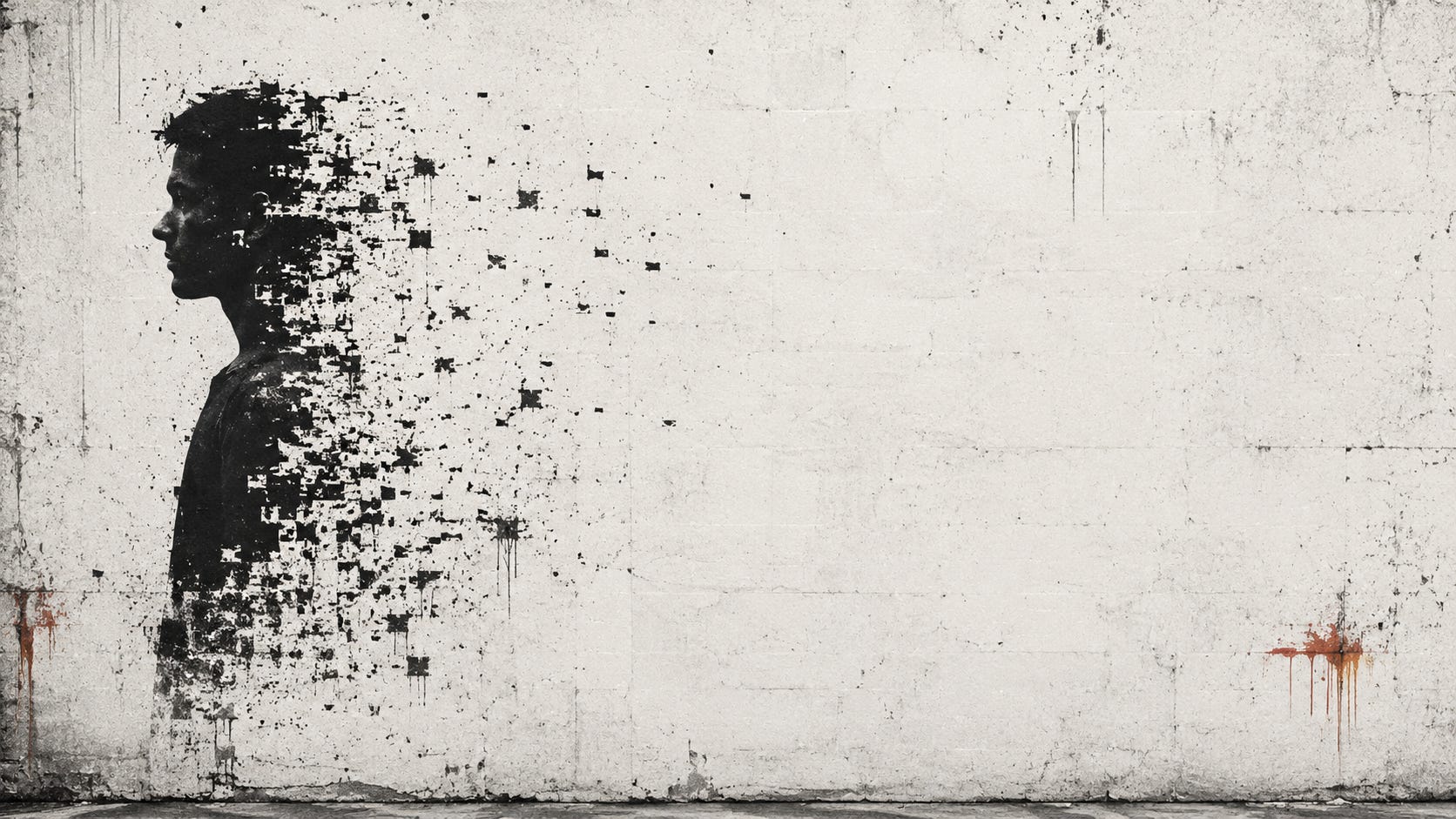
In the last two years, the web changed the rules on who gets seen. Here is what happened and the part of you it’s been hiding.
You made something.
You put it into the world. And the world did not look up.
Not because it was bad. You know it wasn’t bad. You sat with it. You cut the weak lines. You pressed publish with that small, private hope.
And it landed in front of almost no one.
You blamed the topic. Then the timing. Then the headline.
It was none of those.
Somewhere in the last two years, the whole web changed the rules on who gets seen. And it forgot to send any of us the memo.
There is one word that keeps coming back for this. Not unpopular. Not rejected.
Invisible.
Seen by no one, for reasons no one explained.
This is the story of why. And what it is quietly asking you to become.
It is happening everywhere at once
This is not one app’s problem. It is the shape of the whole web now.
On X. On Instagram. On YouTube. On LinkedIn. On TikTok, where it began. It is creeping into search, where an AI answers the question before anyone clicks your link.
The whole web is being re-sorted.
Not by who you know. By what a machine decides you are.
The day the deal changed
For years the web ran on the social graph.
The social graph asked one question. Who do you know?
You followed people. People followed you. You built trust over years, one relationship at a time. When you posted, your followers saw it. That was the deal.
Then TikTok tore up the deal.
TikTok did not care who you knew. A stranger with no followers could reach a million people by lunch. The machine watched what you watched, decided what it was about, and served it to people who liked that sort of thing.
They call it the interest graph.
The interest graph asks a different question. Not who do you know. What are you about?
And it worked so well that everyone copied it.
The machine took the door
Facebook went first. Back in 2014, a study of more than 100 pages found reach falling from about 16% of followers to around 6% in two years. For the biggest pages it hit 2%.
They called the report Facebook Zero. We did not want to believe it.
Then it climbed inside the feed itself. On earnings calls, the man who runs Facebook and Instagram has tracked how much of what you see is now chosen by AI from accounts you do not follow. In 2022 it was about 15%. By 2024, more than half of everything on Instagram.
X is the same. Its own engineers say the For You feed is about half from people you follow and half from a map of roughly 145,000 interest groups the machine drew on its own, redrawn every three weeks.
The professional networks work the same way, in a suit.
Their engineers have published how the feed decides who sees your post. It first turns you into words a machine can read. Your behaviour. Your history. Your connections. All of it rewritten as a description.
Read that again.
To decide if you are worth showing, the machine first writes a description of you.
Now the part the critics leave out
This is the best thing that ever happened to the unknown.
A person with no audience, no network, no ten years of showing up can be heard tomorrow. A good idea from a nobody now stands next to a somebody. That is new. That is fairer than the old web ever was.
Because the follower era was never the clean race we remember. It rewarded arriving early and posting often. I know. I started a blog in 2009 with ten dollars and no audience, at 52, with a failed business behind me. Some of my reach was a prize for turning up first, not for being right.
Your followers were never yours.
They were rented. You just did not have the word for it.
So there is no villain here with a face. The villain is a mechanism. And it means well.
What the machine asks of you
To recommend you, the machine needs a clean answer to one question.
What is this, and who is it for?
That is fair. It is also a demand.
Be easy to file.
People who study this have watched what happens to those who are not. A firm that does not sit inside one clear category gets covered by fewer experts and priced at a discount. Films that mix too many genres score lower with audiences. Freelancers who leap between unrelated jobs get read as a dabbler, not a Renaissance mind.
One honest note. When someone tried to repeat the first of those studies years later, two of its three results did not hold up. The penalty for being hard to file is real in some places and shaky in others. That is what a fair reading looks like. And it matters more than a clean story.
What a music service found out about its own listeners
The strongest proof I found came from inside a company.
In 2020, researchers at a music service studied more than 100 million people and around 70 billion plays. They scored every listener from narrow to broad.
Three things fell out.
Listening picked by the algorithm was nearly always narrower than listening people chose for themselves.
When people grew broader over time, they did it by walking away from the algorithm and back to their own choices.
And broad listeners were far more likely to stay, and far more likely to pay.
The company’s own scientists found that the listeners the machine serves best are the ones most likely to walk out the door.
The machine is not broken. It is short-sighted. It is brilliant at the next three minutes and weak at the next three years.
The quietest kind of censorship
There is a second force at work, and this one lives inside you.
A researcher at Duke ran six experiments on what happens when you measure something you enjoy. Measuring made people do more of it — and enjoy it less. Watching the number turned play into work.
Nobody told them to stop. A number did.
Now think about you. Every post hands back a score within the hour. Views. Saves. New followers.
Nobody censors you. You just look at the shape of what worked, and you lean toward it. Then you lean again. After two years of leaning you are a category, and you cannot remember choosing it.
That is the villain in this story. Not a company. A feedback loop with good intentions.
You now need three identities, not two
So where does this leave you?
It leaves you needing three identities.
The personal identity. Who you are when no one is watching. Your fears. Your history. The thing that gets you out of bed.
The public identity. What you choose to show the world. Your work, your voice, your face in the feed.
We have always had those two.
Now there is a third.
The AI identity. The version of you the machine builds to decide if you are worth showing at all.
You did not write it. You cannot see it. But it goes first.
Before a single human reads your words, a machine reads its description of you.
Miss the third, and the first two never get seen.
You become invisible.
Here’s the thing the machine will never tell you.
Under the category it filed you in, there is a fuller version of you. In your patterns. Your energy. The work that lights you up.
It’s hard to see on your own. That’s what I’m building with Zyrro — it reveals that fuller version, then helps you take the first real step toward it.
It’s live now, and the waiting list is open.
→ Become the person you’ve always sensed you could be. Get on the waiting list.
The trap inside the third identity
But here is where it turns.
If you flatten yourself into one neat category just to feed the machine, you win the wrong game.
Leonardo painted, cut open bodies, drew war machines, studied moving water, and spent years working out how birds stay up. Many subjects. One question. How does the world actually work?
Steve Jobs sat in on a class about beautiful lettering with no plan to use it. Ten years later it shaped the Mac. Zen, music, design, animation, shops. Many subjects. One question. How does technology become human?
A modern feed would have told Leonardo to stop posting anatomy, because people came for the paintings.
And the research sides with Leonardo, not the feed. A study of 17.9 million papers found the work with the most impact was mostly ordinary, with one strange spark thrown in. That odd mix was twice as likely to become a landmark.
Not narrow. Not random. A deep base with a strange spike.
What becomes scarce
Every wave of technology makes something cheap. And by doing so, it makes something else rare.
Machines made muscle cheap. The web made facts cheap. Feeds made reach cheap. AI has now made words and pictures cheap.
What is left is everything a category cannot hold. Your story. Your judgement. Your taste. What you have lived. Who trusts you. The gift of carrying an idea from one world into another and knowing why it belongs.
That is your human signal. And it is starting to look less like a style and more like a form of resistance.
Explore broadly. Publish coherently.
Not “be yourself.” That is a greeting card, not a plan.
Own the last step. An email list. A site. Somewhere they can reach you when the road closes. Roads are not land.
Choose a question, not a niche. Write it in one sentence. If it cannot hold five different subjects, it is too small.
Feed the third identity on purpose. Say plainly, again and again, what you are about — so the description the machine writes of you is one you would sign.
Explore broadly. Publish coherently. Wander in private. Land in public under one clear lens.
The file and the person
The machine will file you. That is its job. Most days it does it well.
But a file is a summary.
And no one in the history of the world was ever changed by a summary.
The machine already wrote its description of you. A summary. A category.
But there is a fuller version underneath it. The one you’ve always sensed you could be.
Zyrro helps you find it — and take the first real step toward it.
→ Find the fuller version of you. Get on the waiting list.
You weren’t born to be classified.
You were born to be found.